The Power of Inquiry
I use the power of inquiry when I’m coaching clients and when I need to get myself unstuck. When you hold yourself in inquiry a little longer, something amazing happens: new connections appear and clarity comes within reach.
I usually do this one-on-one, but I had the privilege of holding space for a larger group at Agile Open Northwest 2020 in Seattle, just before the pandemic reached our shores, and the feedback from seasoned practitioners and coaches was overwhelmingly positive.
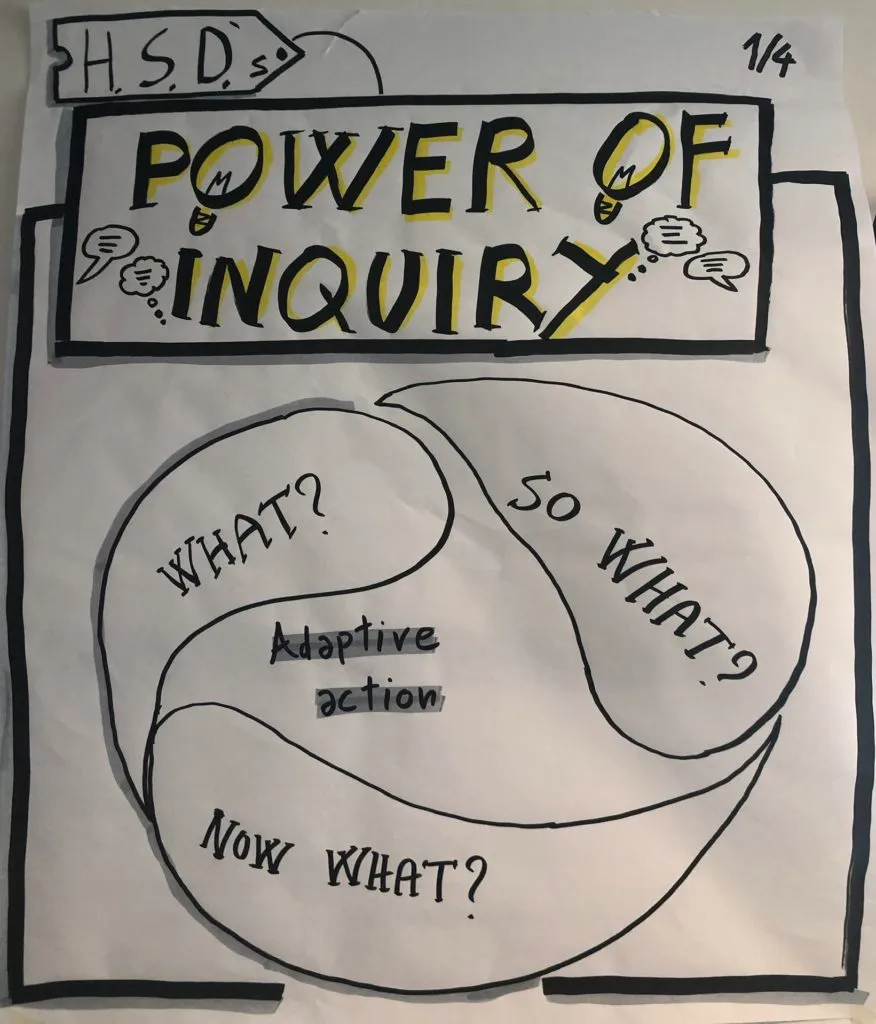
One of my dear friends, Enrico Teotti, used his graphic recording superpowers to capture the session, and I’ll use his drawings below to walk you through the steps.
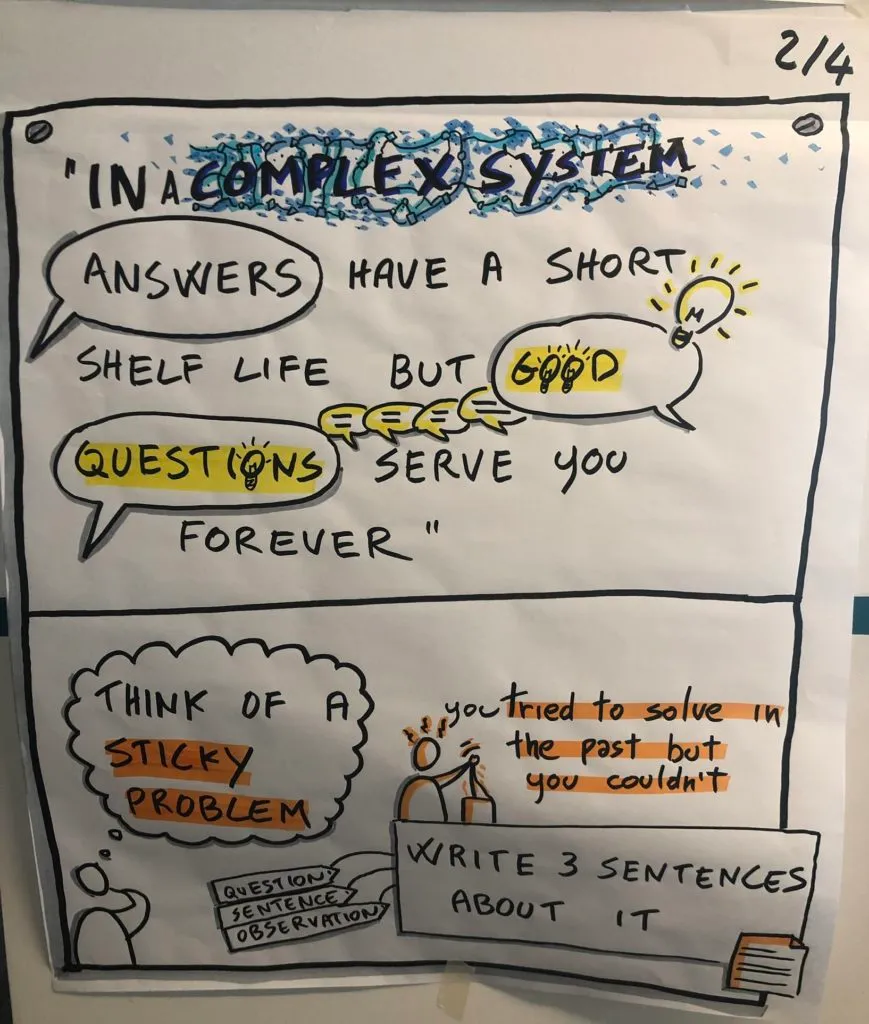
To set the stage, the theory and practice come from Human Systems Dynamics. We believe that in a complex system, answers have a short shelf life, but good questions can serve you forever. Questions that invite a yes or no are fine, powerful questions are better, and complexity-aware questions are best! A complexity-aware question might be: What differences do you see in this issue? Or: What is a normative truth in this sticky issue?
So how would you try this with a friend or colleague?
- Think of a sticky issue: something that’s on your mind, keeps coming back, and seems intractable.
- Write three sentences describing different, possibly unique, aspects of the issue. This part is self-reflection.
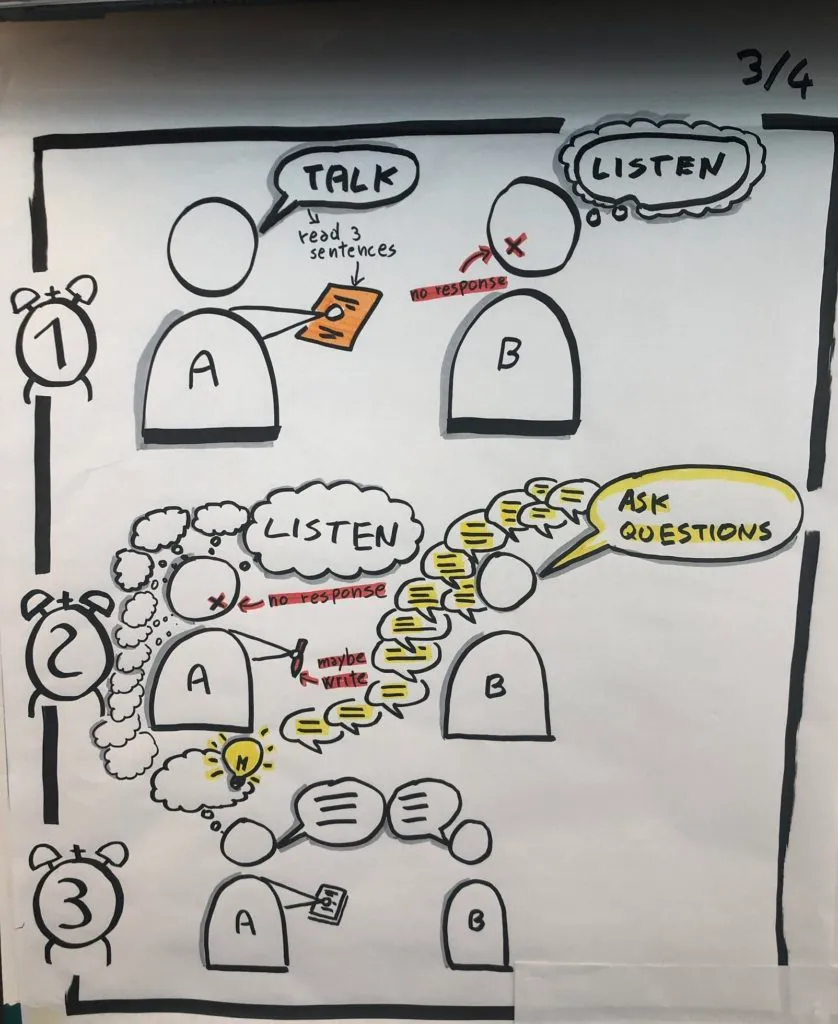
- Now for the fun part. Read your three sentences to the listener, your friend or colleague if this is your first time. The listener doesn’t interrupt and saves their questions for later.
- Once you’ve read your sentences, switch into listening-only mode. For the next three to five minutes, or longer, your friend asks as many questions as they can. Don’t answer any of them, not even clarifying ones. If staying silent is hard, scribble notes on paper.
- Finally, if you like, debrief the experience together. If you’re learning together, swap roles and start again with your friend’s sticky issue.
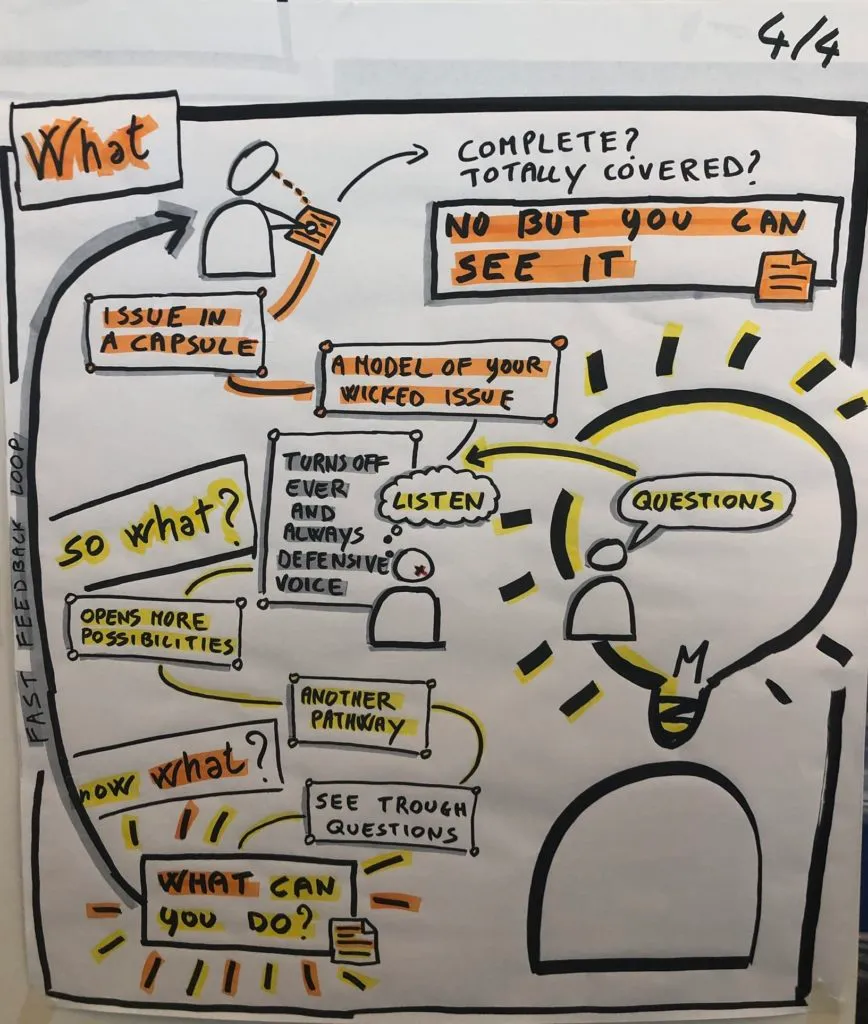
It’s amazing what this simple structure can unlock. Asking the right questions is as much an art as a science, and you’ll get there with deliberate practice and the know-how that only comes from doing it. As you deepen the practice, you’ll come to appreciate how it serves you in a rapidly changing world, helping you take adaptive action. Inquiry is the answer!
So what is one thing you want to try from this practice? Which sticky issue deserves your attention for a better future? Where would you focus: on yourself, your family, your work or society at large?
I’d love to hear from you.